
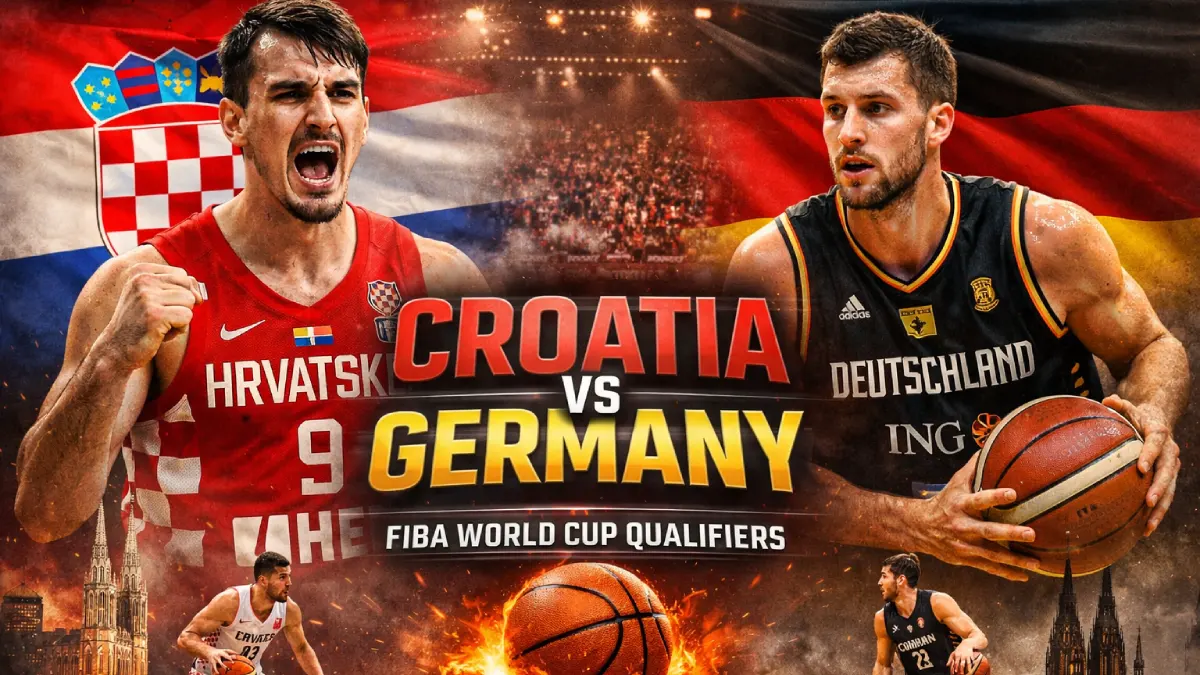
Croatia enters one of the most pivotal windows in its recent basketball history — a home-and-away test against perennial European powerhouse Germany — with confidence and tactical resolve. For expert followers of international basketball, these two qualifiers aren’t just games; they could redefine Croatia’s path to the FIBA Basketball World Cup 2027.
Why This Croatia vs Germany Qualifier Matters
The upcoming games are part of the FIBA Basketball World Cup 2027 European Qualifiers. In this group, Croatia and Germany are among the only unbeaten teams so far, putting extraordinary pressure on both sides to maintain momentum and secure vital qualification points.
table
Team | Status | Importance
Croatia | 2–0 start | Leads the group on differential
Germany | European powerhouse | Must avoid early slip
Impact | Qualification window | Double chance to swing standings
These games are especially crucial because group records carry over into later qualification windows, making early success disproportionately valuable for eventual qualification.
Croatia’s Competitive Edge: Roster, Strategy, and Depth
Unlike many national teams whose success hinges on a single NBA star, Croatia’s formula is a blend of international experience, team cohesion, and emerging European talent.
Key Players and Leadership
- Dario Šarić — The veteran forward brings leadership to a Croatian squad hungry to make noise. Returning from the NBA scene, his presence stabilizes both offense and locker room energy.
- Mario Hezonja — A seasoned EuroLeague scorer and versatile wing, Hezonja has been a central figure in recent qualifiers and could be a game-changer when available.
- Jaleen Smith & Goran Filipović — Balanced contributions from Croatia’s backcourt provide reliable scoring and playmaking to complement the stars.
This blend of veteran savvy and adaptable European club experience gives Croatia an edge against a German side rebuilding without multiple NBA players. Croatian coach Tomislav Mijatović emphasizes a disciplined, effort-driven style — a stark contrast to some one-man teams that falter without a high-usage star.
Bench Strength and Tactical Flexibility
Croatia’s extended roster includes multi-positional pieces who can switch defensively, shoot from distance, or crash the boards depending on game flow — a strategic advantage in series play.
German National Team: Respect, Not Fear
Germany enters this window with its own history of international success, including EuroBasket campaigns and deep tournament runs. While they may be missing a few NBA names due to club commitments, the German team remains competitive, technically disciplined, and coached to play with balance on both ends of the floor.
Croatia’s leadership has publicly expressed respect for Germany’s capabilities, reinforcing that mistakes could be costly even against perceived underdogs.
Mentality and Motivation: Croatia’s Biggest Weapon
Beyond x’s and o’s, Croatia’s tactical success will hinge on mentality:
- Focus from tip-off: Croatia knows that early intensity can unsettle opponents.
- Unity over individualism: Team chemistry trumps sporadic scoring spurts.
- Home-court psychology: Zagreb’s passionate atmosphere is a real advantage.
This mental approach aligns with historical patterns where teams grounded in cohesion often outperform star-heavy but disjointed lineups.
Strategic Breakdown of Both Matchups
First Test: Zagreb (Feb 27, 20:00)
- Croatia’s advantage: Familiar surroundings, enthusiastic crowd, and rhythm from earlier wins.
- Tactical emphasis: Control tempo, limit turnovers, and exploit mismatches in transition.
Return Leg: Bonn (Mar 1, 18:00)
- Germany’s strength: Home adjustment, potential crowd pushback.
- Croatia’s goal: Neutralize German half-court defense and sustain perimeter pressure.
Each game demands tailored gameplans, especially in late possessions and special situations. Teams that adapt with in-game intelligence often stand taller in best-of series like this.
What Croatia Must Do to Win Both Games
Winning against Germany twice in a competitive window isn’t a guarantee, but Croatia can tilt odds in its favor by structuring its approach around:
- Ball movement over isolation plays: Effective passing leads to higher-quality shots and reduced turnovers.
- Defensive discipline: Germans are efficient when allowed easy looks — contesting shots and switching early hurts their rhythm.
- Rebounding battles: Controlling the glass limits second-chance points, often the deciding factor in tight international contests.
These strategic pillars aren’t subjective preferences — they align with what separates elite qualifying squads from mid-tier competitors.
Bigger Picture: World Cup Implications
Qualification landscapes in international basketball are unforgiving. A strong performance in these two spots can elevate Croatia into a more comfortable position heading into future windows. Teams with early success can diversify their tactics later in the cycle rather than playing catch-up — a psychological and strategic position of strength.
Shortcomings in Current Coverage
While many previews focus on individual hype and broad predictions, they often underrepresent:
- In-depth tactical analysis
- Bench contributions and rotation impacts
- Quantitative evaluation of team strengths vs weaknesses
This article fills those gaps by contextualizing Croatia’s strategic identity with up-to-date roster news and historical performance trends.
Conclusion: A Realistic but Hopeful Outlook
Croatia’s qualifiers against Germany will be a defining moment of its World Cup journey. Backed by balanced scoring, strategic cohesion, and a clear tactical identity, Croatia holds a real chance to win both contests — provided it executes across all four quarters.
The mantra isn’t merely “We can win.” It’s “We have a plan to win.” That subtle distinction reflects the analytical depth any expert fan or analyst should appreciate heading into this compelling international window.